


Gyro Cloud Load Balancer Now Available
The Gyro Cloud Load Balancer is now available. It spreads incoming traffic from a single IP address across several of your cloud servers and stops sending traffic to a server that fails its health check, so your site stays up during maintenance or failures. It is a managed service: we take care of setup, updates and monitoring.
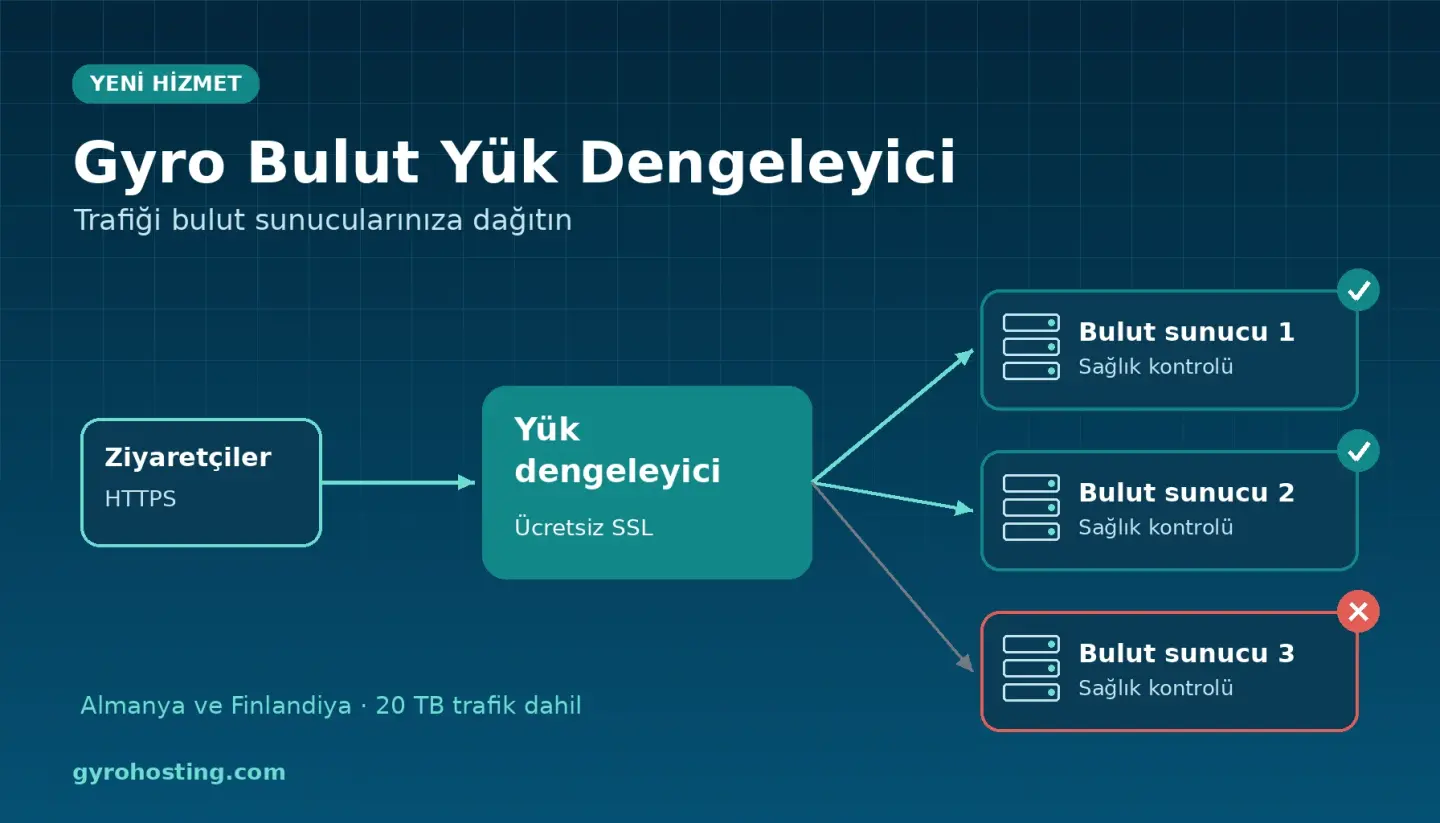
Features
- TCP, HTTP and HTTPS: layer 4 and layer 7 balancing, HTTP/2 and WebSocket.
- Free Let's Encrypt certificates with automatic renewal, or upload your own.
- Health checks: HTTP (path, status codes, Host header) or TCP, with adjustable interval, timeout and retries.
- “All my cloud servers” target: new cloud servers are added automatically.
- Private network connections to targets.
- HTTP to HTTPS redirect, sticky sessions, PROXY protocol, round robin or least connections.
- 20 TB traffic included per month, no overage invoices.
- API, CLI and Terraform:
gyro lbcommands and thegyro_load_balancerresource.
Plans and pricing
| Plan | Concurrent connections | Services | Targets | Certificates | Monthly (excl. VAT) |
|---|---|---|---|---|---|
| Small | 10,000 | 5 | 25 | 10 | €9.99 |
| Medium | 20,000 | 15 | 75 | 25 | €29.49 |
| Large | 40,000 | 30 | 150 | 50 | €59.49 |
Longer billing cycles are discounted. See the Load Balancer page for current prices.
Locations
Available in our EU locations only: Germany and Finland. Targets can be your Gyro Cloud servers in the same region, IPs of your dedicated servers there, or private network addresses.
Infrastructure as code
resource "gyro_load_balancer" "web" {
  size          = "small"        # small | medium | large
  region        = "eu-de-1"      # eu-de-1, eu-de-2 (Germany), eu-fi-1 (Finland)
  algorithm     = "least_connections"
  confirm_order = true           # paid from your account balance

  services = [
    {
      protocol         = "http"
      listen_port      = 80
      destination_port = 80
      health_check = {
        protocol = "http"
        path     = "/health"
        interval = 10
        timeout  = 5
        retries  = 3
      }
    },
  ]

  targets = [{ type = "all" }]   # all my cloud servers
}

output "lb_ipv4" { value = gyro_load_balancer.web.ipv4 }
gyro lb types
gyro lb create --size small --region eu-fi-1 --dry-run
gyro lb service add 1234 --protocol http --listen-port 80 --destination-port 80 --hc-protocol http --hc-path /health
gyro lb target add 1234 --type allOrdering is paid from your account balance; --dry-run shows the price first. Full reference in the developer docs.
Load balancer or health-checked DNS?
A load balancer spreads traffic continuously and takes an unhealthy server out of rotation shortly after its health check fails, independent of DNS caches. For a simple primary/backup setup across locations, health-checked DNS is the cheaper option. Moving your domains' DNS too? See Gyro DNS.
Comments0
No Comments Yet
Be the first to share your thoughts.
Please sign in or sign up to leave a comment.